
Cooking better
How to read a recipe ingredient list
A clear guide to the little words in an ingredient list that change how you measure, prepare and add food.
 By Salsa
THE SHORT ANSWER
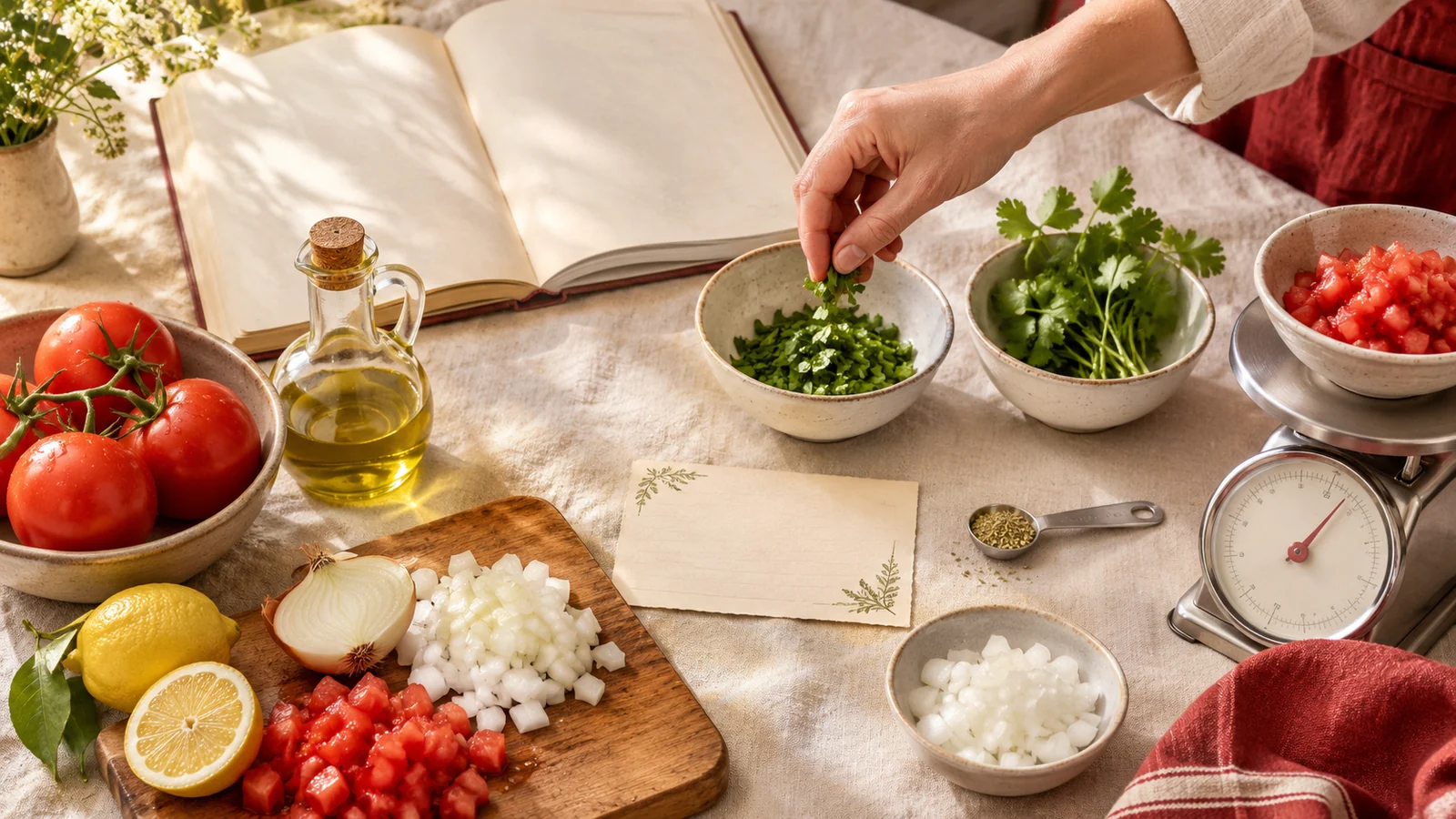
Read each ingredient line as an amount, an ingredient and any preparation note. “Divided” means the total appears in more than one step. “1 cup walnuts, chopped” usually means measure whole walnuts, then chop; “1 cup chopped walnuts” means chop first, then measure. Read the method to confirm each use before you start.
Ingredient lists can look like shopping lists, but a few small words tell you when to measure, what form the food should take and whether to hold some back. Catching those details before the pan is hot is easier than repairing a mixture after everything has gone in.
This guide focuses on interpreting the ingredient lines. For the full read-through and cooking sequence, use our step-by-step recipe guide. The examples below are illustrative wording examples, not a tested recipe.
Read the ingredient list beside the method
First check the yield, then scan the ingredient list and every cooking step together. Mark anything that appears twice, any preparation that takes time, and anything you must reserve for a later stage. A well-written recipe often lists ingredients in order of use, but you still need the method to know exactly when they go in. The Ontario Home Economics Association recommends order-of-use lists, “divided” for repeated ingredients and clear preparation notes.
| Look at | Ask | Do |
|---|---|---|
| Yield and units | Is this the serving size and measurement system I intend to use? | Keep the source recipe’s amounts together; check any serving adjustment before measuring. |
| Preparation words | Does the food need to be chopped, drained, softened or thawed first? | Do that work before the step where the ingredient is added. |
| Repeated use | Will some of this ingredient be needed later? | Read each use and reserve the amount the method specifies. |
If the list and method disagree, return to the original source or the recipe author’s notes. Do not assume a tidy imported card has corrected an unclear source. This matters especially for measurements, allergens and doneness.
Notice where the preparation word sits
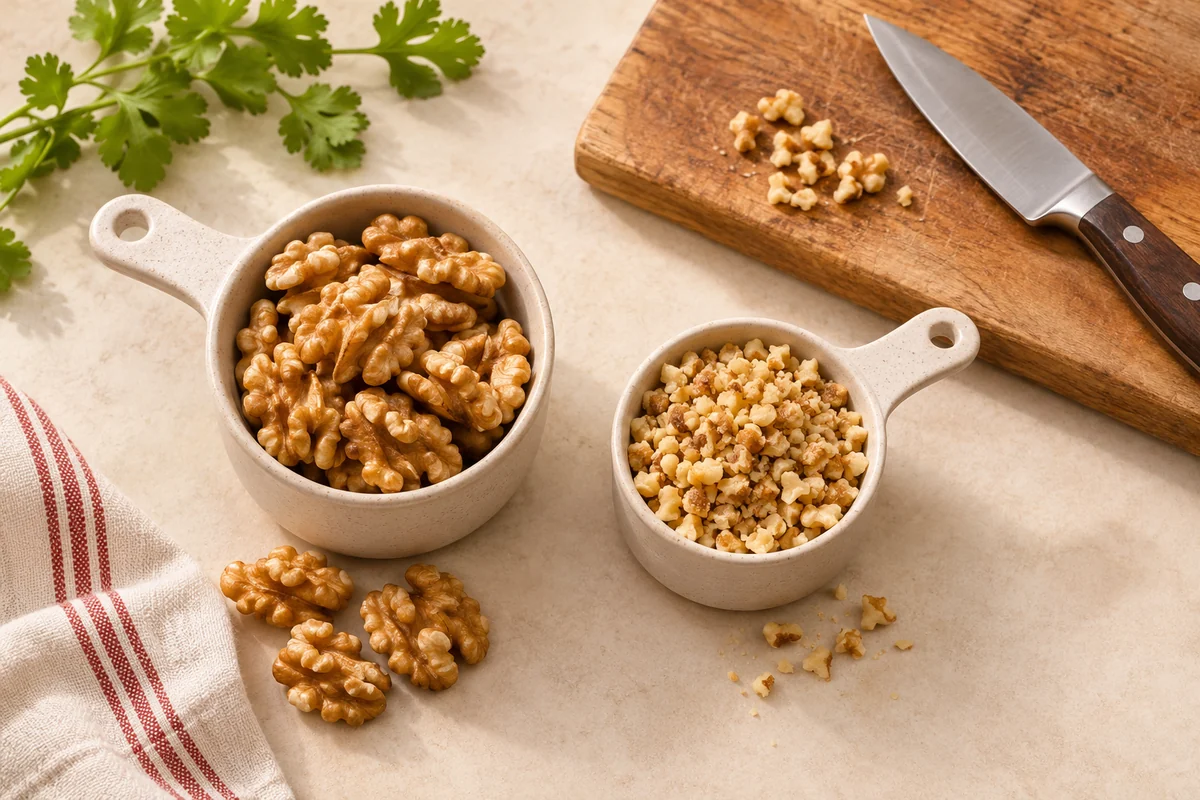
With a volume measure, the order of words can change what fills the cup. King Arthur Baking’s recipe guide gives the same distinction with sliced strawberries: a measure of whole fruit followed by slicing is different from a measure of fruit already sliced. The walnut examples below apply that convention. Individual authors may write differently, so check their notes when precision matters.
| Ingredient line | Usual reading |
|---|---|
| 1 cup walnuts, chopped | Measure a cup of whole walnuts, then chop them. |
| 1 cup chopped walnuts | Chop walnuts first, then fill the cup with the pieces. |
The same care applies to “packed” brown sugar, “drained” beans and “room-temperature” butter: those words describe the condition the recipe expects. They are not optional decoration. For baking, use the recipe’s stated gram weights if it provides them. For a cup measure, King Arthur advises a dry cup for dry ingredients and a clear spouted cup read at eye level for liquids. Avoid converting a cup of one ingredient to grams using another ingredient’s weight.
“Divided” means save some for later
If a line says “3 tablespoons olive oil, divided”, the three tablespoons are the total for the recipe. The instructions might call for one tablespoon in a pan and two tablespoons in a dressing; those numbers are only an illustrative example. Follow the actual method’s split. Do not pour all three tablespoons at the first mention of oil.
Repeated-use ingredients are common in recipes with a sauce and topping, a marinade and finish, or a mixture and garnish. Before cooking, find every instruction that uses the ingredient and set aside any later portion. If the method never tells you how to divide it, check the original source rather than guessing. This is also a useful check when a recipe was copied from a photo or imported from a page.
Give the ingredient list a one-minute check
Find the full amount
Match each quantity and unit to the original recipe, especially fractions, ranges and similar abbreviations.
Mark preparation and timing
Notice chopped, grated, drained, thawed, softened and room-temperature instructions before you begin.
Trace every use
Find each divided ingredient in the method and reserve what is needed later.
Keep the source handy
When a saved or imported recipe is incomplete, compare it with its original page or book before cooking.
Keep ingredient amounts in view while cooking
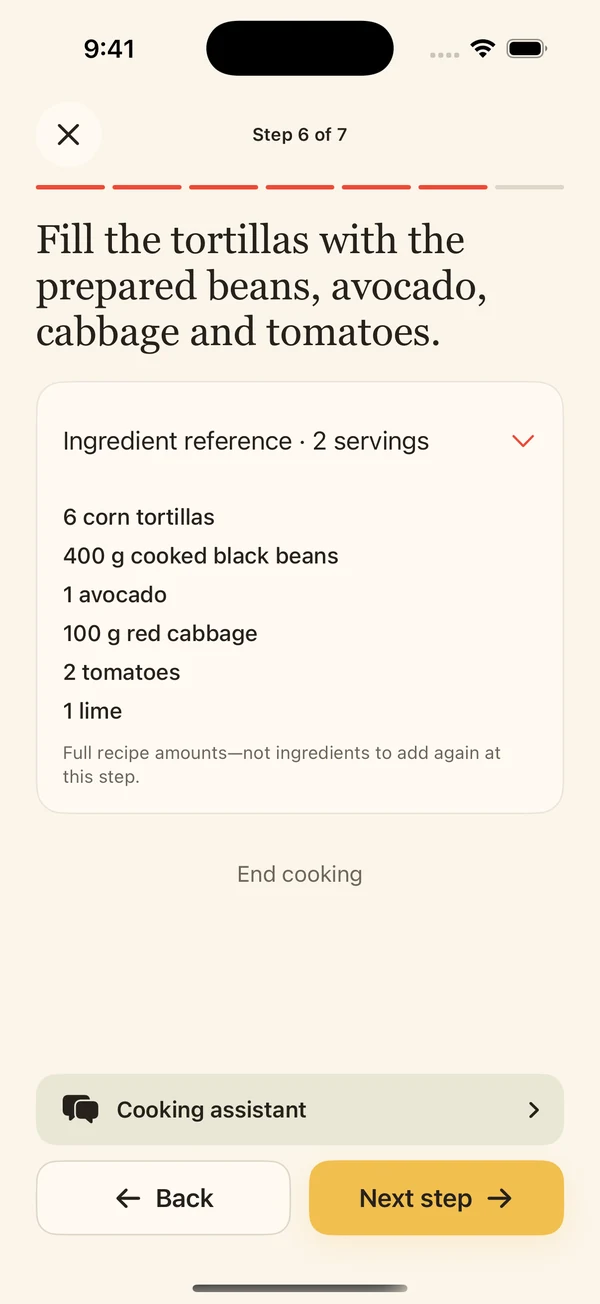
Salsa’s released iPhone app shows ingredient amounts alongside guided cooking steps and lets you start relevant timers yourself, according to its current App Store listing. That can make the method easier to follow on a phone, but you still check the saved amounts against the original when something looks wrong.
If you are cooking a smaller yield, see our recipe-halving guide before changing quantities.
Common questions
What does “divided” mean in ingredients?
The listed quantity is used in more than one part of the recipe. Read the steps to find the split; reserve a later portion before you start cooking.
Do I chop before or after measuring?
In common recipe notation, “1 cup walnuts, chopped” means measure first; “1 cup chopped walnuts” means chop first. Follow any specific instruction from the recipe author if it differs.
Does “room temperature” mean I can leave food out all day?
No. It describes the ingredient condition the recipe needs at use. Follow the recipe’s timing and your local food-safety guidance for perishable ingredients; do not leave them out indefinitely.
What if an imported ingredient line is unclear?
Open the original recipe and compare the amount, unit and preparation wording. Do not guess a missing measurement or allergen. If the source itself is unclear, seek the author’s clarification or choose a clearer recipe.